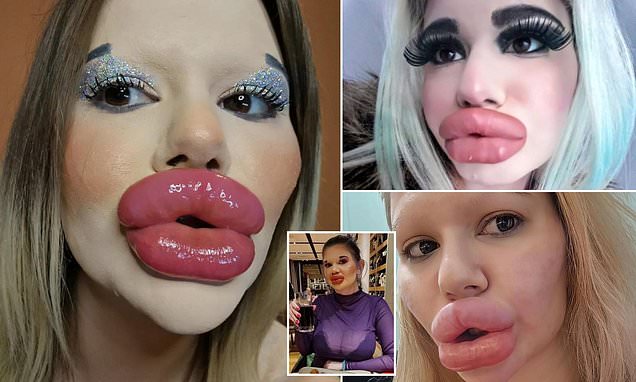
I – Ross Clarke, author of this blog post – am an observer of sorts. I notice things around me, and I sometimes think about the things I notice. I think about them and I question them. It was only recently I found myself thinking “where did this whole big lips thing come from?”
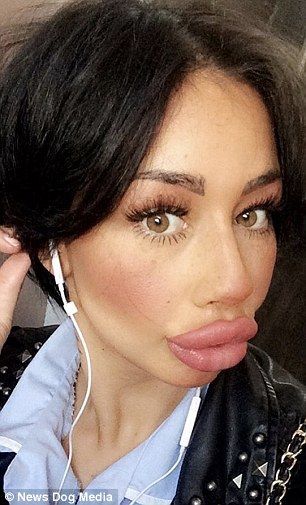
I was watching television with someone and we chatted about this big lips thing. I realised that I’ve been seeing big lips on women for the past few years now. I didn’t really notice it creeping up, I actually think the average set of inflated lips grew and grew and grew over the years and nowadays they have gone so big that you just can’t help but think “whoa, what is going on here?”
It’s the ubiquity of them too that you can’t ignore. They are everywhere. They are totally in vogue. It’s almost like having normal lips just isn’t fun any more. The observed consensus seems to be if you’ve got lips then you ought to use filler.
I wondered where this trend came from, so I consulted with the internet to find out.
According to Chat GPT and other online sources, including an article from Women’s Health Magazine ( https://www.womenshealthmag.com/beauty/a19961541/the-obsession-with-big-lips/ ); the big lips trend was sparked by Angelina Jolie in 2006 when she took the title of “World’s Most Beautiful Star.” It then evolved in the 2010s mostly because of influencers Kylie Jenner and the Kardashians. Much of the influence was driven by social media, with the term “Instagram lips” being used to describe puffy filler lips. The look is achieved by injecting hyaluronic acid into the lips.
As noted previously in this blog post, I recently found myself watching television with someone and we chatted about the big lips thing. The show we were watching was I’m A Celebrity Get Me Out Of Here. For what it’s worth I’m not a follower of that show. In fact I don’t really watch much mainstream TV at all, but that’s a story for another day.
Anyway within that same conversation about big lips, I also queried the contemporary omnipresence of mega white teeth. I couldn’t help but ask does everybody on TV now have fake teeth? I’m genuinely curious, are fake teeth now a requirement to work in the TV industry? I would guess they probably are.

Apart from the fact that I barely knew any of the typical Z-list losers in I’m A Celebrity it looked like everybody on the show had fake teeth, and everybody on every TV commercial has fake teeth. Everybody on reality TV has fake teeth.
Celebrities that had no teeth in their 40s now have perfect teeth in their 70s and 80s. Iggy Pop is 78 and he has better teeth than me, but when he was my age he had hardly any teeth at all. Every time you turn on TV, see an advertisement or flick through a magazine you always see people with a smile so perfect it’s almost too perfect. Dick Van Dyke is 100 and it’s hard to believe that his cheesy enticing smile could be natural.
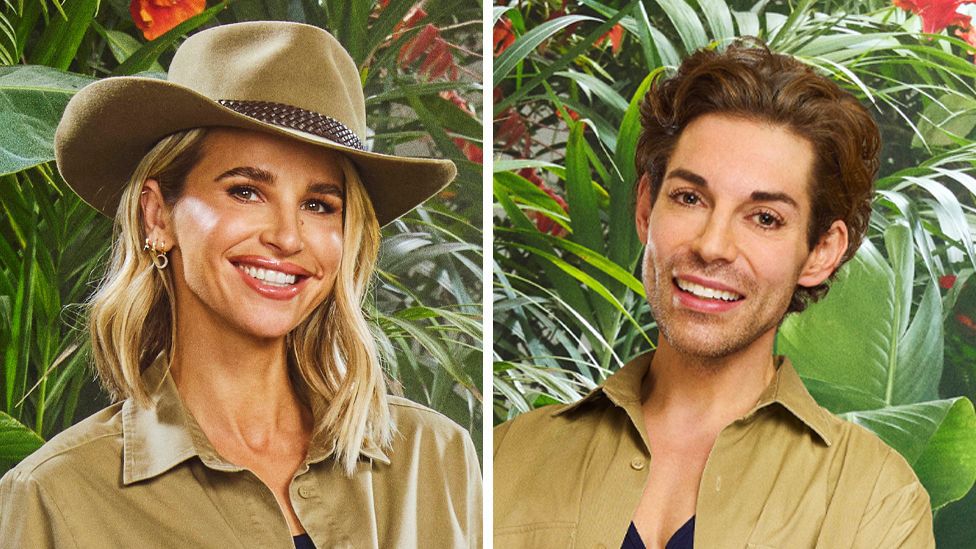
Big lips, fake tan, mega white teeth; if you open your eyes you see a big focus on image moulding the forces that influence us. In my lifetime as a 35 year old man I have noticed changes to how image-conscious we have become.
For my parents generation it would have been an utterly ridiculous concept to imagine a man that wears fake tan, whereas nowadays at least 1 in 4 young men openly wear fake tan ( https://www.thesun.ie/living/fashion-and-beauty/448490/brit-men-under-25-more-likely-to-fake-tan-than-women-as-celebs-like-mark-wright-lead-male-beauty-trend/ ).
For Gen Xers and Baby Boomers the unwritten rules of an adequate presentation were simple. Neatly groomed hair, clean shoes and a respectable blazer were sufficient. However millennial society and Gen Zers attach far greater significance and detail to image. Designer barber shops that double up as tattoo parlours and botox clinics are now commonplace, but they did not exist 20 years ago. Back in the 2000’s a man could not go for a skin fade, tattoo and botox top-up all in the one sitting.
It might be fair to say that we have become an image-obsessed society.
It was always the case that women would wear make-up and beautify themselves with a bit of pampering, but measures to “enhance” one’s appearance have evolved and not just for women. Image standards have totally changed for men as well.
There are trends known as looksmaxxing, softmaxxing and mewing that describe the practices involved in sculpting male image. Modern young men and boys engage with bone smashing, chin sculpting, supplements and surgical interventions, mostly to make themselves more atttactive to women ( https://www.theguardian.com/lifeandstyle/2024/feb/15/from-bone-smashing-to-chin-extensions-how-looksmaxxing-is-reshaping-young-mens-faces ).
With so much of modern life invested into personal image I’ve found myself wondering “are we more happy now than we were when beer bellies were more common than gym bods?” The answer I’ve come up with is “probably not.”
I think that our amplified obsession with 21st century image standards has degraded us into a more fragile, more body dysmorphic, more mentally ill society.
The 2020 documentary The Social Dilemma highlighted a stupendous growth in young people’s suicide statistics linked to the growing use of smartphones and social media.
Last year there was an international news story about a young man from France that committed suicide after a botched beard transplant ( https://www.telegraph.co.uk/world-news/2024/10/27/student-takes-life-botched-beard-transplant-estate-agent/ ). Also between 2015 – 2019 four people that were involved in Love Island UK committed suicide. Love Island is a TV show centred around image-obsessed young people.
If the trend continues towards bigger whiter teeth, looksmaxxing and cosmetic alterations, what will people look like in another 30 years, and will a more cosmetically enhanced society have more or less mental health problems?
 Ross Blogs